Why We Always Come Back to Lime Plaster
It breathes. It shifts with the light. It records the hand that applied it. In a world of perfectly flat drywall, lime plaster is an act of faith in imperfection.
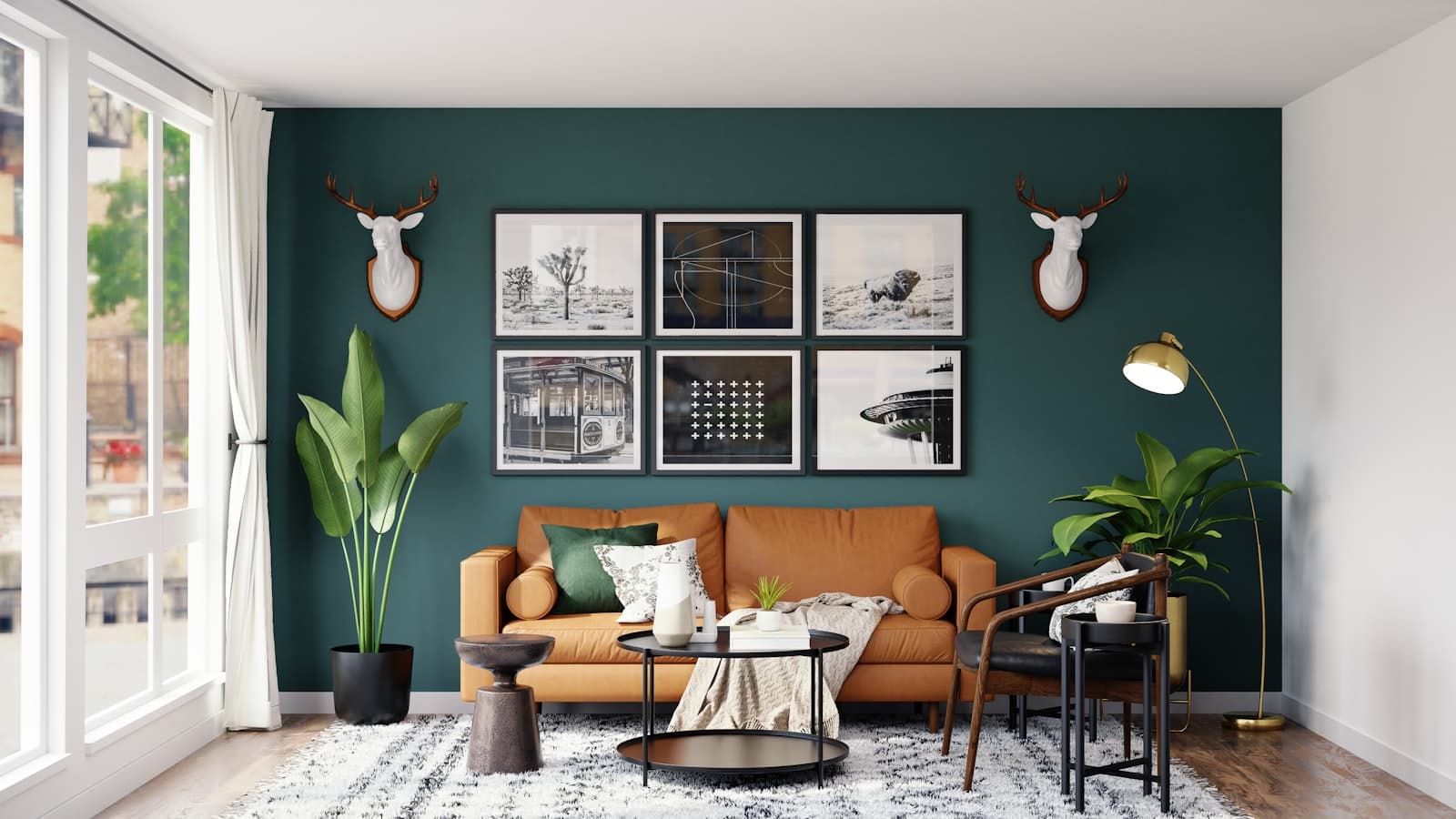
There is a moment in every project when we stand in a room that has just been plastered and watch the light move across it. The surface is not flat — it undulates, almost imperceptibly, recording every pass of the trowel. When the afternoon sun hits it, the wall seems to glow from within. This is lime plaster, and it is one of the oldest building materials on earth.
We have used it on nearly every project for the past decade. Not because it is trendy — though it has certainly found its moment — but because nothing else achieves what it achieves. Lime plaster breathes. It regulates humidity. It develops a patina over time that becomes more beautiful, not less. And it connects a home in Montecito to a 4,000-year lineage of building with the earth.
The Material Itself
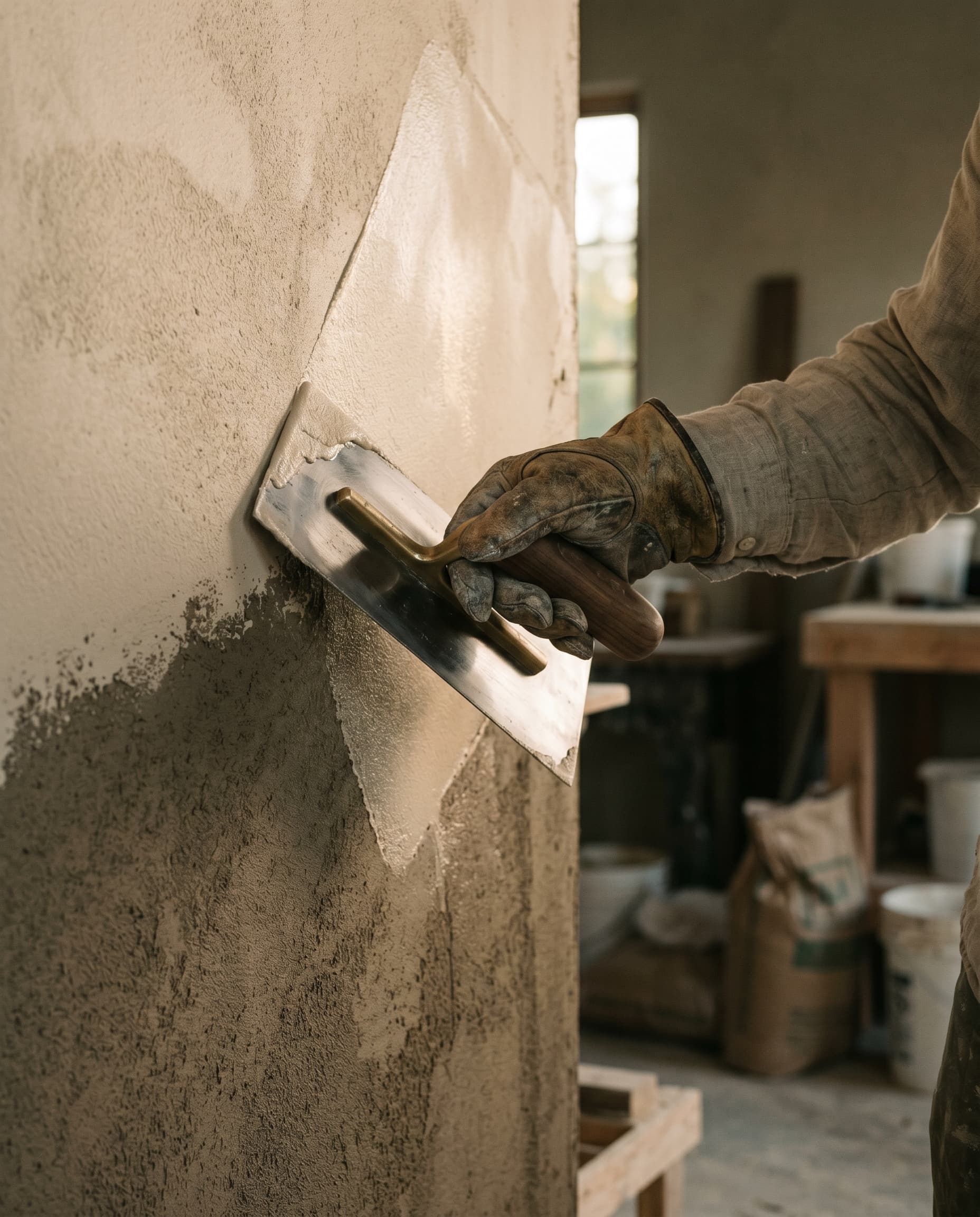
Lime plaster is deceptively simple: slaked lime putty, marble dust, and natural pigments, mixed with water and applied by hand in multiple thin coats. Each coat is burnished — compressed and polished with a steel trowel — building up a surface with extraordinary depth. The marble dust catches light. The lime carbonates over time, growing harder and more luminous with age.
What makes it different from paint on drywall is the same thing that makes a hand-thrown bowl different from a factory mold. The irregularity is the point. When light rakes across a lime-plastered wall, it reveals subtle valleys and peaks — evidence of the human hand. In a world of machine-perfect surfaces, this is radical.
The wall becomes a collaborator. It takes the color you give it and transforms it throughout the day — cooler at dawn, warm gold by four o'clock, amber at sunset.
Why Santa Barbara, Specifically
Lime plaster is not merely well-suited to Santa Barbara — it is historically native to it. The city's Spanish Colonial Revival architecture, born from the post-1925 earthquake rebuild, was originally finished in lime-based stucco and plaster. George Washington Smith's iconic homes used it. The Mission uses it. When we apply lime plaster to a Montecito estate, we are not imposing a trend. We are continuing a conversation that began a century ago.
The material also responds exceptionally to Santa Barbara's light. The coast-facing orientation of most Montecito homes means rooms are washed in a warm, diffused light that lime plaster amplifies and softens. The effect is impossible to capture in photographs and difficult to describe — the room feels alive, as though the walls themselves are exhaling.
The Partners We Trust
Application matters as much as material. A poorly applied lime plaster is just an expensive mess. We work primarily with two partners: Kamp Studios in Los Angeles, who are the preeminent plaster artisans in Southern California, and Portola Paints, whose Roman Clay and lime wash products are formulated specifically for the California climate. Both understand that the goal is not perfection — it is controlled imperfection.
When Not to Use It
We are advocates, not zealots. Lime plaster is not appropriate for every surface. High-moisture areas like shower interiors require tadelakt — a related but distinct lime-based finish that is waterproof. Surfaces that will receive heavy impact or have children's art taped to them regularly may be better served by a high-quality matte paint. And lime plaster requires a skilled applicator — it is not a DIY material.
But for living rooms, bedrooms, hallways, dining rooms, and any space where you want the walls to feel like more than boundaries — lime plaster is, for us, the answer we keep coming back to. It is one of the ways we make a home feel as though it has been here for generations, even when we finished it last month.
If you are considering lime plaster for your project, we would love to discuss the possibilities. Every wall is different, and every light condition suggests a different approach. That is what makes this material endlessly interesting — and why, after a decade, we have never grown tired of watching the sun move across it.
Designing for the Montecito Light →
The light here is different. Warmer than Malibu, softer than Palm Springs, with a golden quality that changes every room it enters. We don't fight it — we design for it.
A Morning in Summerland: Where We Source the Unexpected →
The antique collective on Lillingston Avenue has been our secret weapon for a decade. Here's what we look for and why the hunt matters as much as the find.
Send us your plans. We'll send back a review.
If you're early in a project — schematic, design-development, or permit set — send your drawings and we'll return a written review within five business days, free.