What Luxury Means Here
In most places, luxury is something you add. On the Central Coast, it is something you subtract. A walk at dawn. A long table at dusk. A house that disappears into the life inside it.
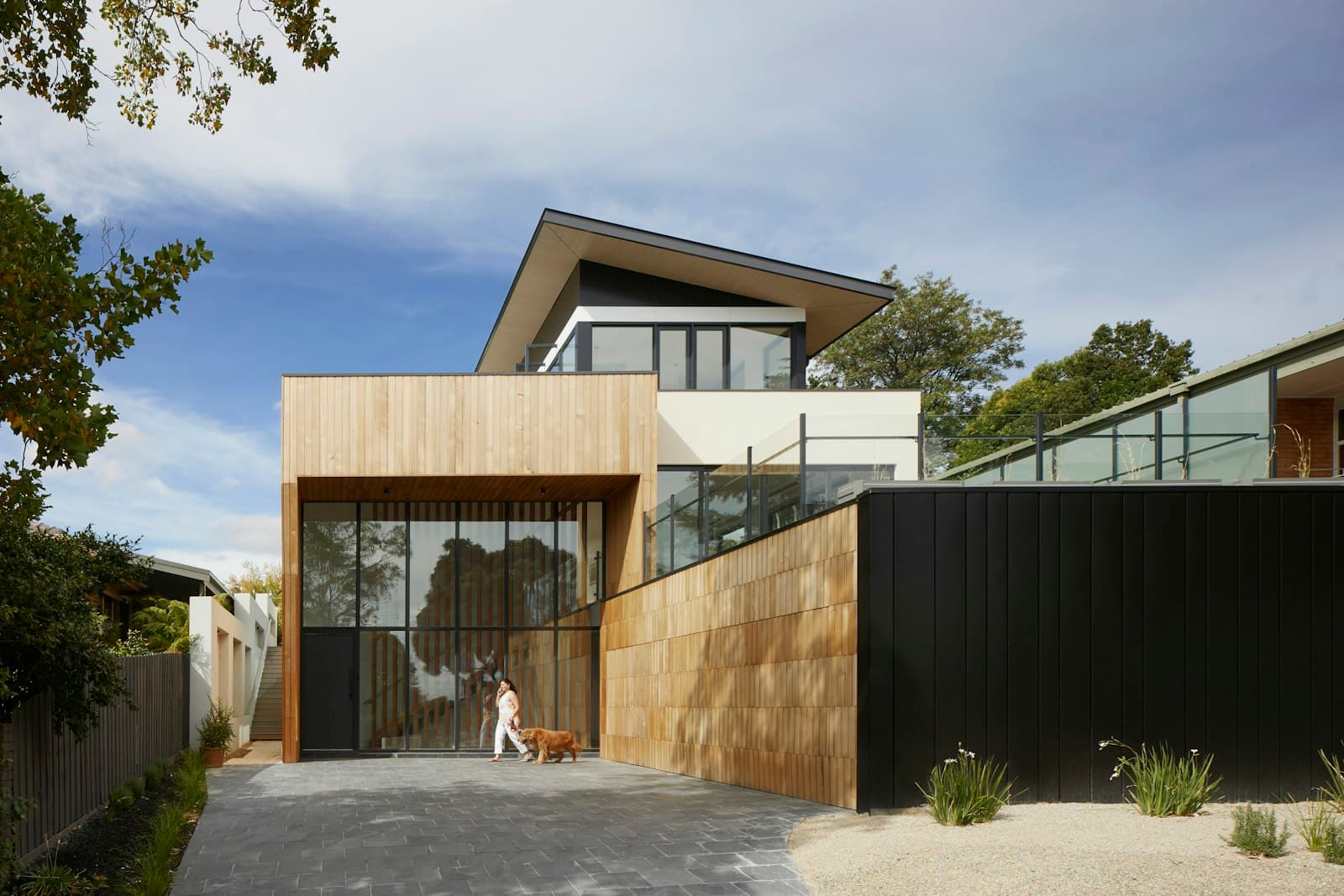
Montecito is, by certain measures, one of the wealthiest zip codes in America. You would not always know it from the drive. The hedges are tall and the gates are modest. The cars tend toward old Broncos and new electric wagons. The nicest house on the block is often the one you never see from the road. There is money here, certainly, but the aesthetic is quieter than the bank statements suggest — and that quiet is not incidental. It is the whole point.
We have spent enough time designing in Los Angeles, New York, and Aspen to recognize a different register here. Central Coast luxury is not additive. It does not signal. It is, almost uniformly, a process of subtraction — of noise, of clutter, of the things that make a day smaller. The houses we love the most, and the houses our clients most want to live in, are the ones that clear space for a life rather than stage one.
What follows is less a design essay than a field note on that life — what a well-lived week on the Central Coast actually looks like, and how the architecture of our days here quietly rewrites what the word luxury means.
The Morning Has Texture
A Central Coast morning has a particular weight to it. The marine layer sits soft on the hillside until ten. The air smells of eucalyptus and ocean salt. Birds are louder than anything else. If you live here long enough, you begin to organize your life around this hour — first light to mid-morning — because it is when the day is most generously yours.
Our clients tell us, almost without exception, that mornings are the time they most want their homes to work. A coffee on a porch facing east. A swim at Butterfly Beach before the lot fills up. A walk through Hammond's Meadow with a dog. A stretch on a mat beside open French doors. None of these are indulgences. They are the structural foundation of a good life here, and the home that supports them is a home that earns its keep.
We design for these mornings with almost invisible interventions. An east-facing breakfast room that catches the first gold. An outdoor shower tucked off a primary suite, open to the sky. A mud room generous enough to hold a surfboard and a pair of hiking boots. A threshold between inside and outside so low that the body does not register the transition. The house asks nothing of you at this hour. It simply opens.
The Afternoon Belongs to Work — or to the Land
There is a persistent misconception that Santa Barbara is a retirement community in disguise. It is not. The afternoons here are full of people at work — founders running companies from converted back houses, novelists at desks overlooking the channel, vintners walking their rows in the valley, ranchers tending cattle two ridges north of us, and a surprising number of people whose work is simply the cultivation of their own home and land.
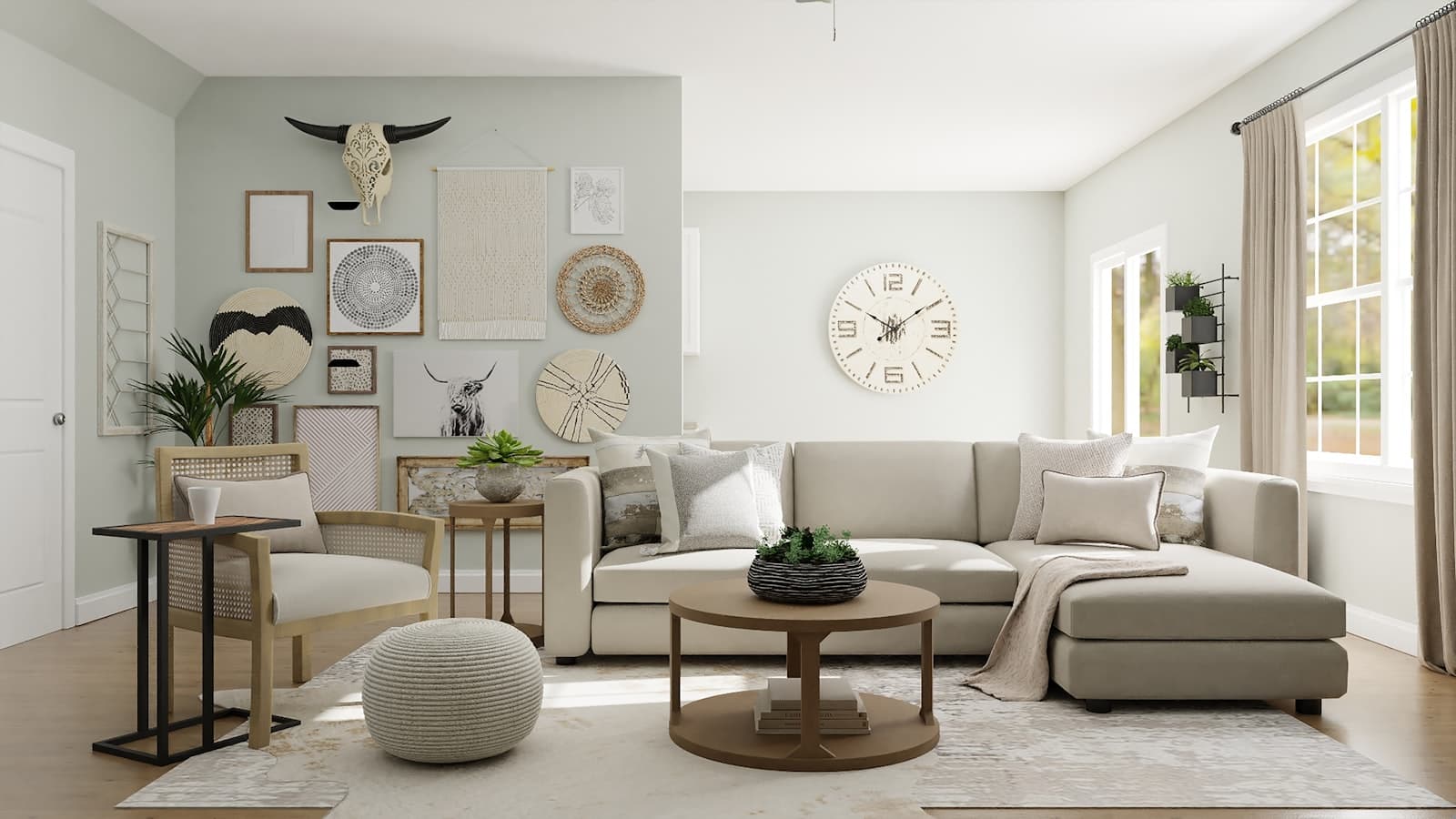
The clients we work with tend to take their work seriously, and the houses that serve them well reflect that. Nearly every project we design now includes what we call a real room for the owner's real work. Not a performative study with leather chairs and unread books, but a room where the work actually happens. A small library with north light and a reading chair. A studio off the garden with a sink and a flat surface big enough for ideas. An office with a door that closes and a view that rewards looking up.
The luxury here is not the square footage. It is the fact that the room is not a set. A working room looks worked in. Books are used. The desk has a scratch on it. A mug has left a ring on the table. This is what it looks like when a house is allowed to participate in your life rather than be preserved for photographs of it.
The most luxurious rooms we design are the ones that would not photograph well without the person in them.
The Table Is the Center
Ask anyone who has lived here more than a year to describe their happiest recent evening, and nine times out of ten it will involve a table. Not a restaurant table. A home one — long, informal, outdoor if the weather allows, sometimes for eight, sometimes for twenty. A few bottles of the valley's wine. Something pulled off the Summerland grill. Meyer lemons from the tree by the kitchen. Kids running in and out. Candles down to the wick.
This is, in our experience, the single most requested quality of a Central Coast home. Not the primary suite, not the wine cellar, not the gym. The table. And the architecture that makes it possible: a kitchen that opens to a dining room that opens to a terrace, a terrace with a fireplace and enough roof overhead that you can eat outside in February, a pantry that can hold the volume of a real gathering, an indoor-outdoor flow that is not a real estate cliché but a structural honesty about how people actually want to live.
The table is the center because it is where the Central Coast expresses its defining value: that life is made of people and food and weather and time, and that a house is, at its best, an instrument for arranging those things in good proportion.
The Evening Is Gentle
The light goes long here. In October, the golden hour begins at four and continues, somehow, until seven. The Santa Ynez Mountains turn lavender, then mauve, then a deep violet blue. The sky above the channel goes through a sequence of colors that embarrasses the word sunset. This is arguably the single best hour of any Central Coast day, and it is the hour for which we design with the most care.
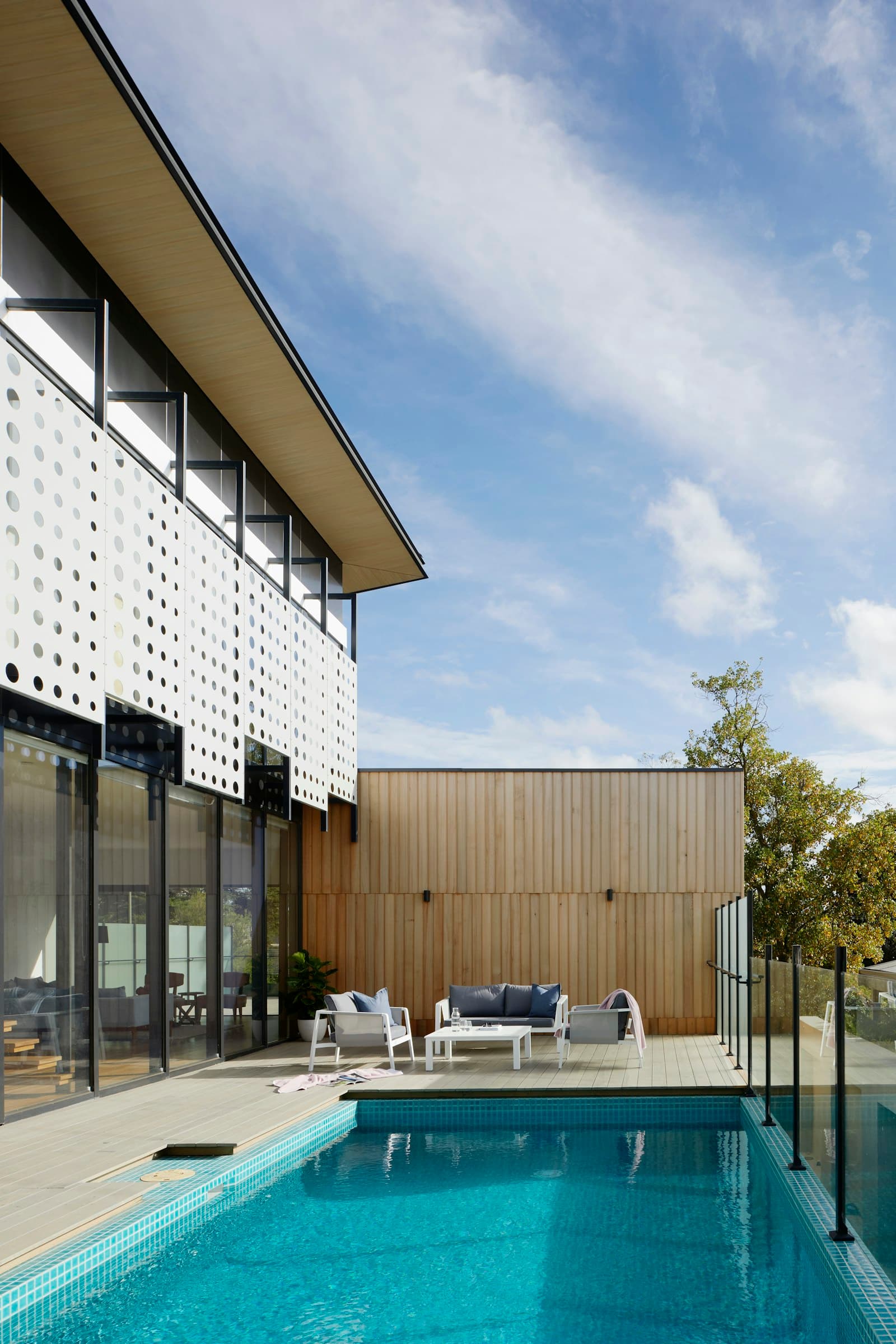
A well-considered Central Coast home has a west-facing loggia or a terrace oriented to catch the evening light. It has outdoor seating that can hold a drink and a conversation without requiring that the conversation be staged. It has a fireplace outside for the hour after the sun drops, when the air turns cool even in summer. And it has an interior lighting plan that can transform the room from a sunlit space at six to an intimate one at eight without anyone flipping a switch.
The work, in these hours, is to disappear. To leave the light alone. To frame the view and step out of the way. The most successful evening rooms we have designed are the ones where nothing visible calls attention to itself — and the memory of the evening is about the people in it, not the house around them.
The Week Is Permeable
What surprises newcomers about Santa Barbara is that the week does not have hard edges. There is no clear boundary between weekend and weekday, between work and leisure, between the ordinary hours and the special ones. Saturday is the farmers' market on Cota Street. Sunday is a hike up Romero Canyon. Tuesday is yoga at a friend's studio and a quick dinner on the patio. Thursday is a gallery opening in the Funk Zone. Every day has a little texture to it, and no single day is asked to carry the weight of a whole week's worth of living.
This, we think, is the quiet secret of why homes here function differently than they do in the places our clients come from. A weekend house in the Hamptons is designed for extremity — for the Saturday dinner, the Sunday tennis, the scarce perfect hours. A Central Coast home has a different brief. It needs to hold a Tuesday afternoon as gracefully as a Christmas Eve. It needs to feel right for a solitary morning and for forty-person birthday. It needs to be, above all else, livable — not spectacular.
Luxury As Subtraction
The paradox is easier to name than to practice. In a place where people can afford anything, what they most often want is less. Fewer rooms, done beautifully. Fewer materials, chosen with care. Fewer objects, each of them loved. A kitchen with three knives that are used every day instead of thirty that are not. A closet with ten good things instead of a hundred mediocre ones. A living room with a chair that fits the body rather than an arrangement that fits a catalog.
Subtraction is harder than addition. It requires taste, and patience, and the willingness to say no to things that are, in themselves, perfectly fine. But it is the discipline that makes a Central Coast home feel like a Central Coast home — and not a transplant from somewhere else. The land here is too beautiful to compete with. The light here is too good to cover up. The life available here is too rich to crowd out.
When a project succeeds, and we look around the finished house a year later, the measure is not what we added. It is what we did not. The walls that stayed quiet. The color palette that deferred to the view. The materials that age instead of declare. The kitchen that works for a Tuesday and for a holiday without being reconfigured between them. The room that fills with golden light at five and does not need anything else.
A house like that is what we mean by luxury here. Not a statement, but a setting. Not a showcase, but a life. And, with any real care, a home that would still be beautiful even without the zip code printed on the envelope.
Designing for the Montecito Light →
The light here is different. Warmer than Malibu, softer than Palm Springs, with a golden quality that changes every room it enters. We don't fight it — we design for it.
Five Trees That Define the Montecito Landscape →
The coast live oak, the Moreton Bay fig, the Italian stone pine, the olive, and the sycamore — each one shapes how we design the homes that sit beneath them.
The same vendors we hand to every client.
The Cerro Studio Working Book — our directory of the craftspeople and material sources we trust on every project.